
Published March 9, 2026
What Is a Real Estate Short Sale?

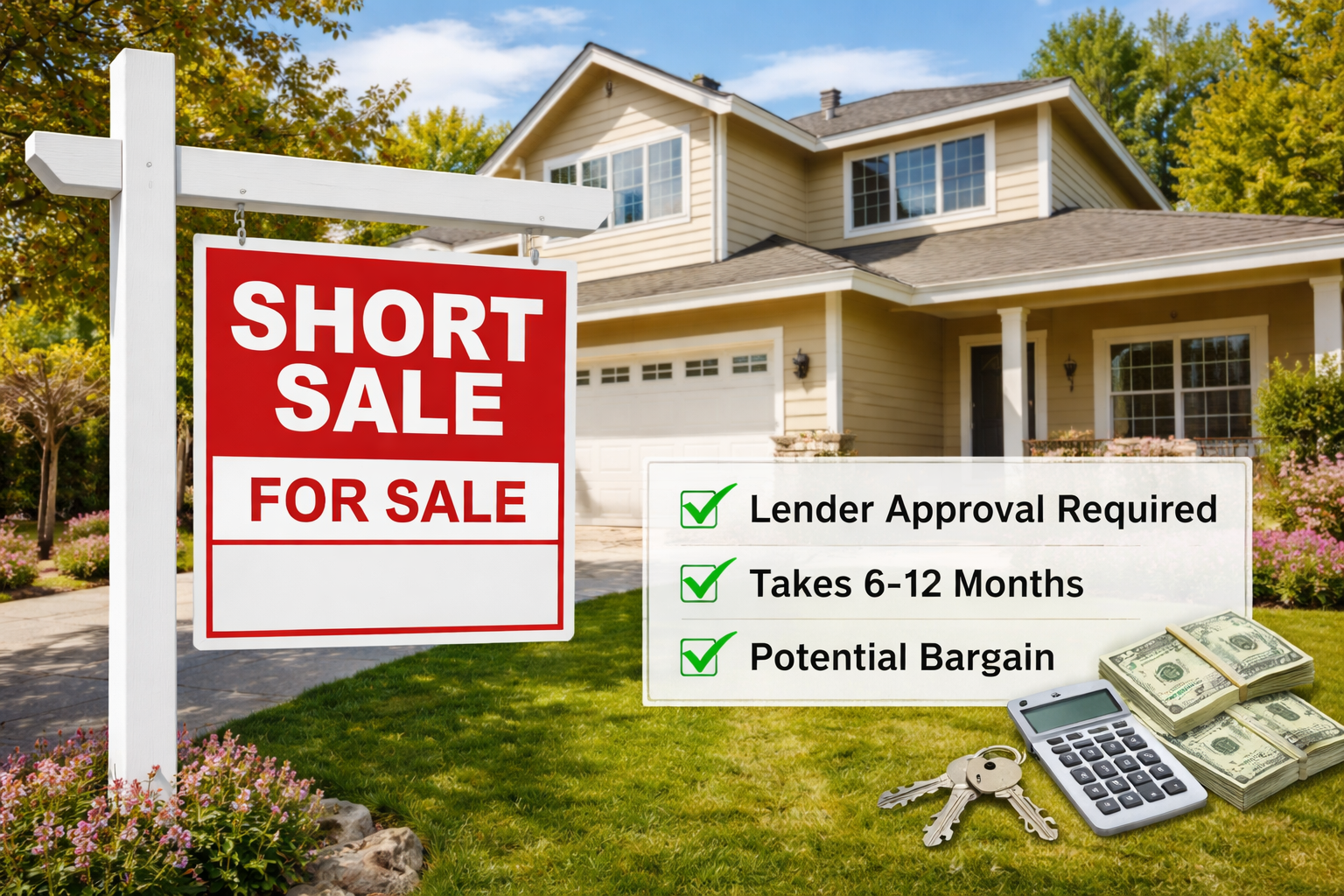
What Is a Real Estate Short Sale? A Guide for Buyers
If you are shopping for a home, you may come across a property listed as a short sale. For many buyers, that term can sound confusing or even a little intimidating. The good news is that once you understand how a short sale works, you can decide whether it is the right opportunity for you.
A short sale occurs when a homeowner owes more on their mortgage than the home is currently worth, and the lender agrees to accept less than the full amount owed to sell the property. In other words, the sale price comes up “short” of the mortgage balance, which is where the term comes from.
How a Short Sale Works
In a traditional home sale, the seller accepts an offer, and the transaction moves forward. In a short sale, there is an extra step: the lender must also approve the sale.
That means even after the seller accepts a buyer’s offer, the bank or mortgage company must review the terms and decide whether to accept a payoff less than the loan balance. Because of that extra approval process, short sales are often more complicated than regular transactions.
Why Buyers Consider Short Sales
Some buyers are drawn to short sales because they may offer an opportunity to purchase a home at a competitive price. In some cases, a short sale can be a good value. However, buyers should understand that a lower price often comes with more patience, more paperwork, and more uncertainty.
A short sale is not always a quick or simple path to homeownership, but for the right buyer, it can still be worth considering.
The Biggest Difference: Time
One of the most important things buyers need to know is that short sales can take a long time. It is not unusual for a short sale to take six months to a year to receive lender approval.
This timeline can be frustrating for buyers who need to move quickly. If you are considering a short sale, you should be prepared for delays, repeated document requests, and a process that may not move on a typical schedule.
Patience is essential.
What Buyers Should Watch Out For
Another important issue buyers should understand is that some agents or companies involved in short sales may add an additional 5% fee to hire a third-party company to negotiate the short sale with the lender.
That extra fee can significantly affect the transaction and may ultimately come out of the buyer’s money or reduce the overall value of the deal.
With 32 years of real estate experience, I have completed many short sales myself. I believe in handling the short sale negotiation directly for my clients rather than bringing in an outside company and charging buyers for something I am fully capable of doing. My goal is always to protect my clients’ best interests and avoid unnecessary extra costs whenever possible.
Is a Short Sale Right for You?
A short sale may be a good fit if:
-
You are flexible on timing
-
You understand the process may be lengthy
-
You are comfortable with lender approval delays
-
You want to explore potential value opportunities
A short sale may not be the right fit if you need to close quickly or if you are not comfortable with uncertainty.
Final Thoughts
Short sales can offer buyers an opportunity, but they are very different from traditional home sales. The process involves the seller, the buyer, and most importantly, the lender. Approval is not automatic, and timelines are often much longer than expected.
The most important thing is to work with an agent who understands the process, communicates clearly, and knows how to navigate short sale negotiations without passing unnecessary costs on to the buyer.
With the right guidance, a short sale can be manageable — but it is important to go in with realistic expectations.
Call or email us today for additional questions. LizBeth Abbott | Principal Broker| Formerly Lizbeth Hale